Mid-Side Processing in Mastering
Most engineers encounter mid-side processing for the first time in a plugin. They open it up, see the mid and side channels separated, and start moving things around to see what happens. That's not how I use it.
M/S processing is a surgical tool. I don't reach for it because it's there. I reach for it when there's something in the center of the mix that needs addressing, or something in the sides, and I can't get there any other way without affecting everything else.
What Mid-Side Does
Before getting into how I use it, it's worth a quick explanation of what M/S processing is.
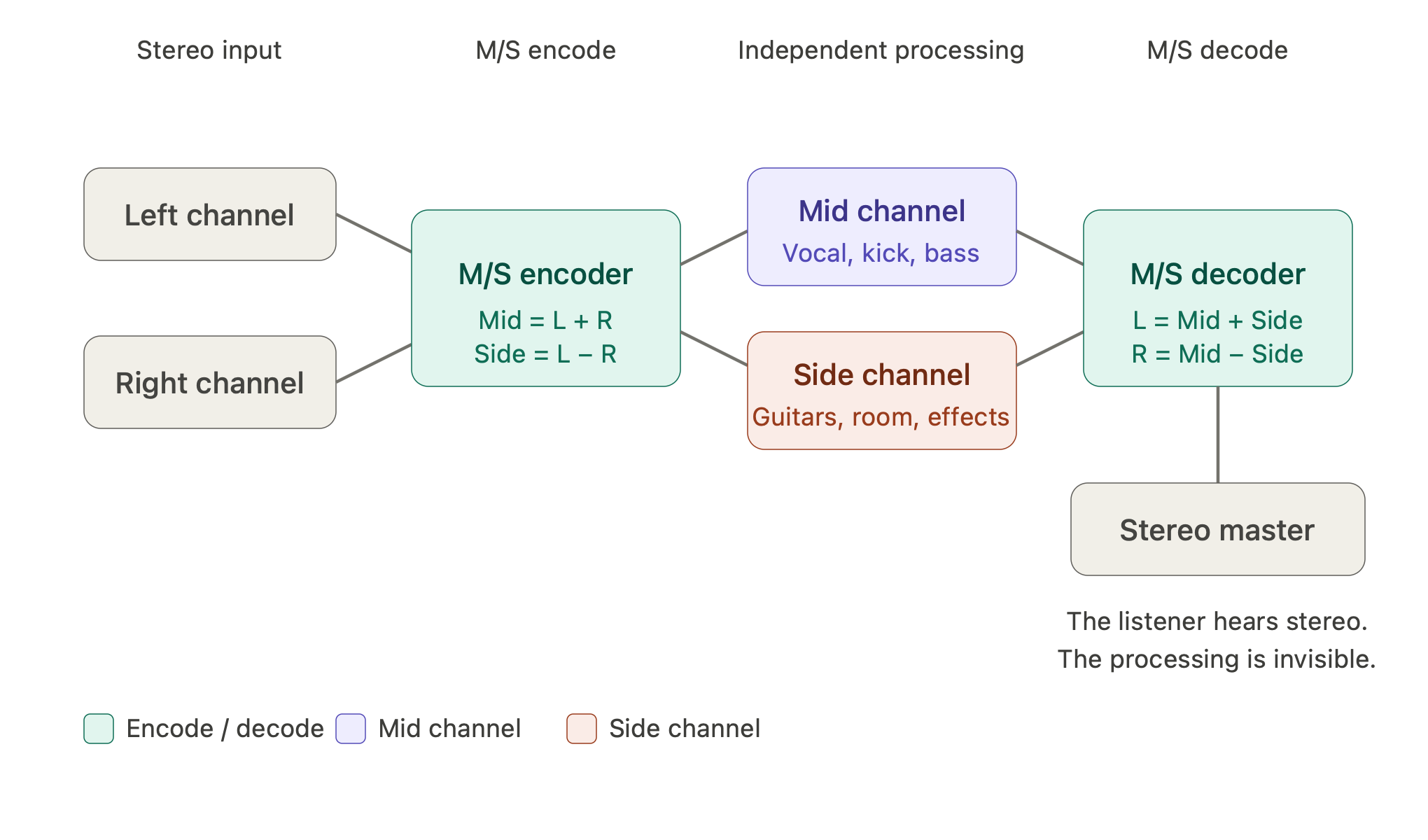
A standard stereo signal has a left channel and a right channel. Mid-side encoding converts that into something different: a mid channel, which contains everything that is common to both left and right, typically the lead vocal, kick, snare, and bass. The side channel contains everything that differs between left and right, typically panned guitars, percussion, room ambience, and stereo effects.
Once you're working in M/S, you can apply EQ or compression independently to the mid or the side without touching the other. When you're done, the signal gets decoded back to stereo. The listener hears a stereo master. They have no idea what happened in between.
My M/S Setup
I have M/S available at several points in my chain. The Maselec MTC-1X mastering transfer console has M/S built in. The Dutch Audio MSM1 is a dedicated hardware mid-side matrix that I use to route through analog gear, specifically the ITI Audio MEP-130 parametric EQ, in M/S. I also have M/S available on the Manley Variable Mu, the Manley Stereo Mastering Pultec EQ, and the Maselec MEA-2.
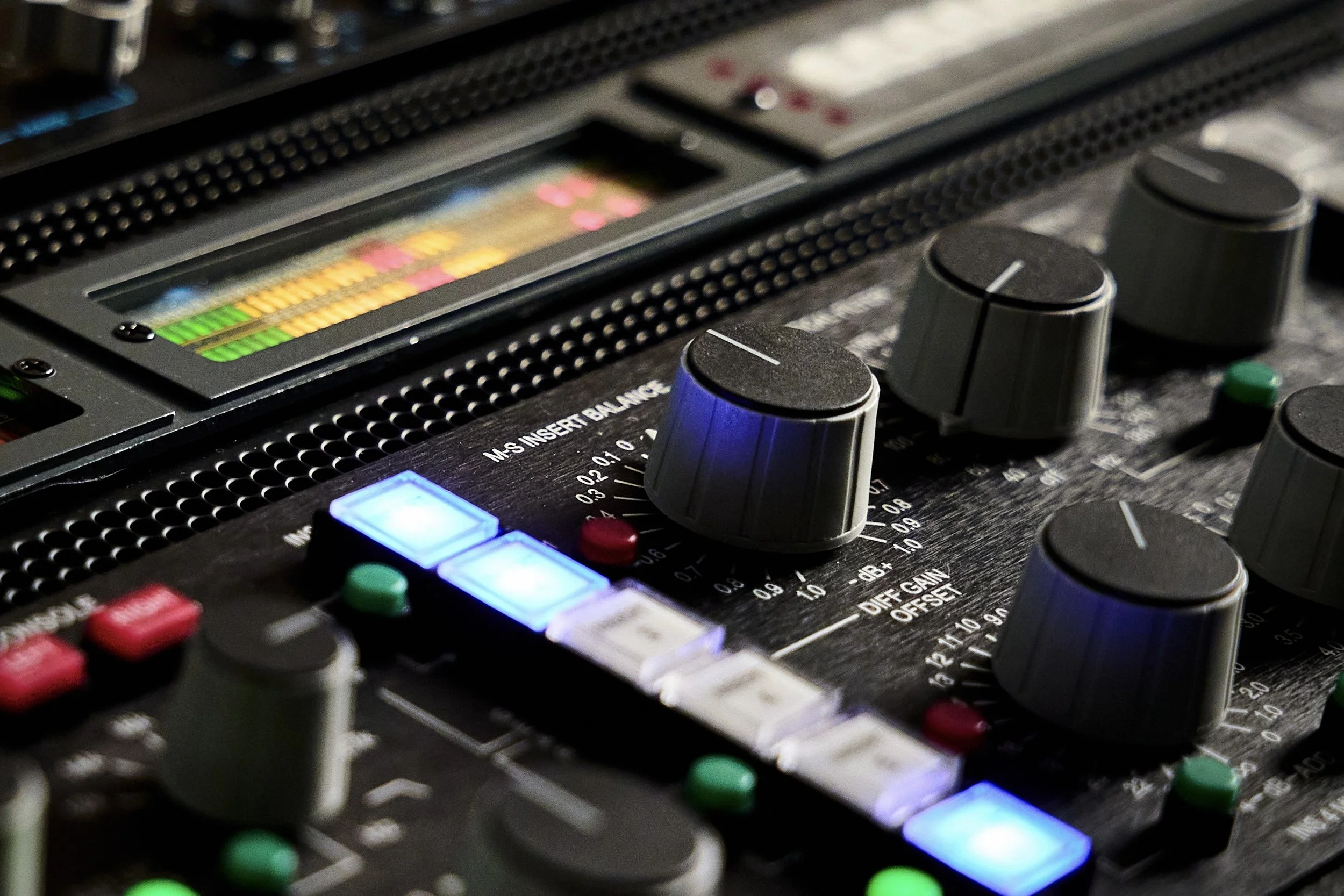
The MSM1 does the same thing a plugin does in terms of encoding and decoding. The difference for me is analog hardware in general: I get there in half the time. With plugins there's decision paralysis, infinite options, infinite adjustments, and somehow a forum thread for every wrong answer. With hardware I make a move, I hear it, I commit or I don't. The workflow is faster and more decisive.
When I Actually Use It
The most common scenario is a vocal that's too present or too harsh in the context of the master. The lead vocal lives in the mid channel. If I compress or EQ the full stereo signal to address it, I'm also affecting the kick, the snare, the bass, everything else that shares that center space. In M/S I can go directly to the mid and make a targeted move without touching the sides at all.
I had a record come in recently where the doubled harmony vocals were heavily sibilant. They happened to be hard-panned, sitting almost entirely in the side channel. A de-esser on the full stereo signal would have pulled the sibilance down everywhere, including the center, where the lead vocal was sitting fine and didn't need touching. In M/S I could de-ess the sides only and leave the center completely alone. The doubled harmony vocals came back under control without the lead vocal losing any of its presence. That's the kind of move that simply isn't possible any other way.
The other scenario I come back to regularly is a snare that's too punchy in the context of the master. The snare sits in the mid. A touch of compression on the mid channel tames it without touching the room ambience, the panned percussion, or anything else living in the sides. The snare settles. The sides stay open. The mix holds together better without anyone being able to point to what changed.
Knowing When You've Gone Too Far
This is the part that takes time to learn. When you over-process in M/S, too much compression on the mid, too aggressive on the sides, the image collapses. The stereo field narrows, things that should feel wide feel mono, or the center loses its coherence and starts to feel detached from the rest of the mix. You feel it before you can fully articulate it. The mix stops sounding like a mix and starts sounding like a problem.
You have to know. There's no meter that tells you when M/S processing has gone too far. A correlation meter will show you the collapse but it won't tell you when you're approaching it. It's a feel, and developing that feel takes time behind the desk with real material.
The goal is always the opposite of collapse. You're trying to bring cohesion, to make the elements of the mix relate to each other better, to give the master a sense of being finished and settled that the mix didn't quite have.
The Client Never Knows
That's by design.
When a master comes back and it feels more put together than the mix, more final, more done, the client can feel that but they can't point to why. They don't know M/S was involved. They don't need to. Mastering doesn't change the mix. It refines it, clarifies it, and prepares it for the world.
M/S processing is one of the tools that makes that possible. When it's working, it's invisible.