The Big Crunch Transformer Box
Why Transformers In Mastering?
In mastering, transformers are not just passive components. They are responsive tonal tools. They shape sound through frequency-dependent saturation, subtle phase interactions, and harmonics that shift depending on the program material. A delicate acoustic mix, a dense rock track, and a modern electronic production all excite the same transformer differently, making it uniquely interactive at the final stage of mastering.
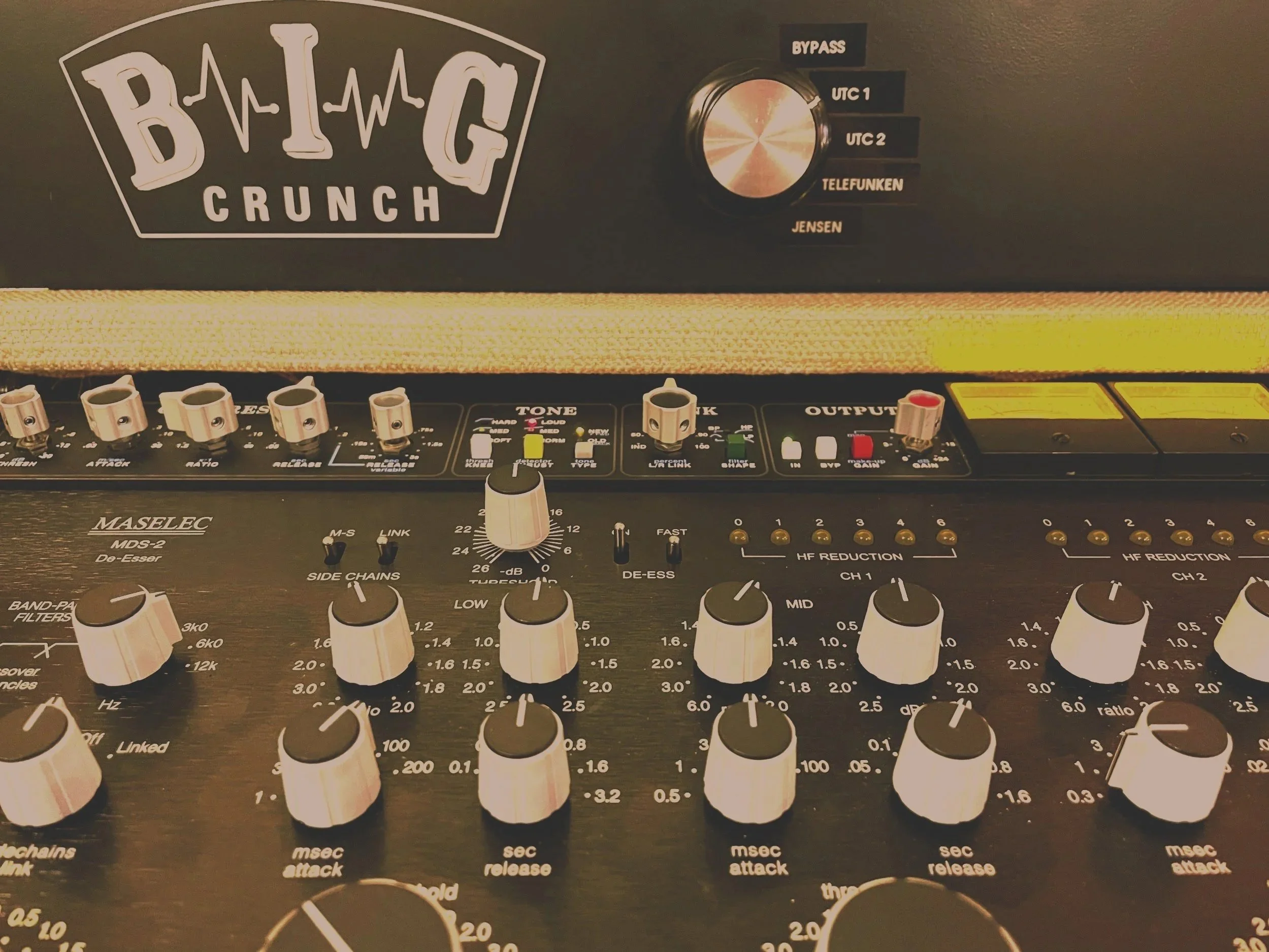
Brooks Harlan and Shawna Potter at Big Crunch built me a custom passive transformer box to explore these interactions directly. Finished mixes pass through vintage line transformers wired at 600Ω in and out, fully level-matched, with an Elma rotary switch for selecting the transformer while keeping all other variables constant. The result is subtle but perceptible: shifts in density, tonal weight, and cohesion that feel intrinsic to the mix rather than imposed on it.
Big Crunch Box
The box houses three transformer pairs:
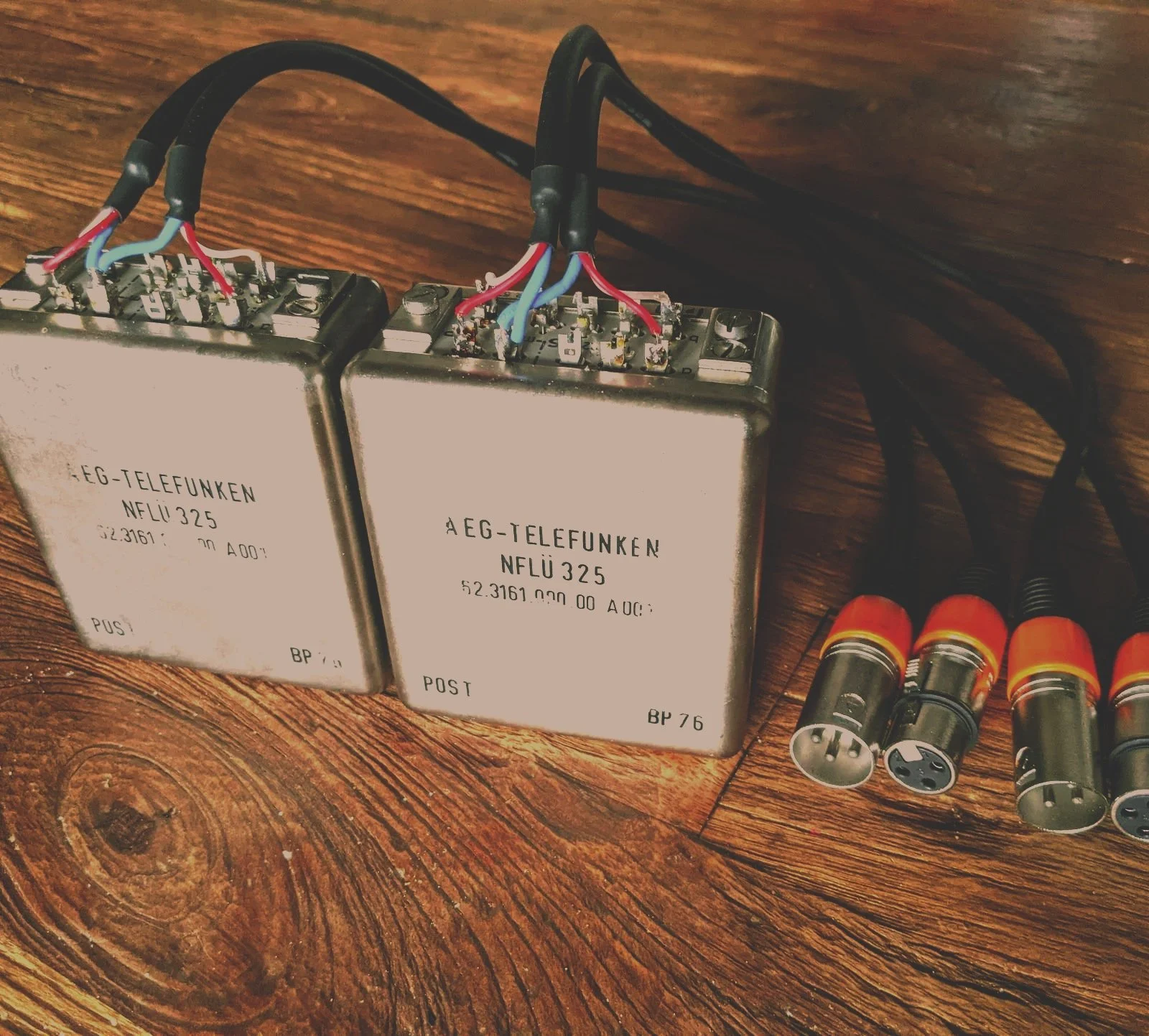
Telefunken NFLÜ 325
UTC LS-140
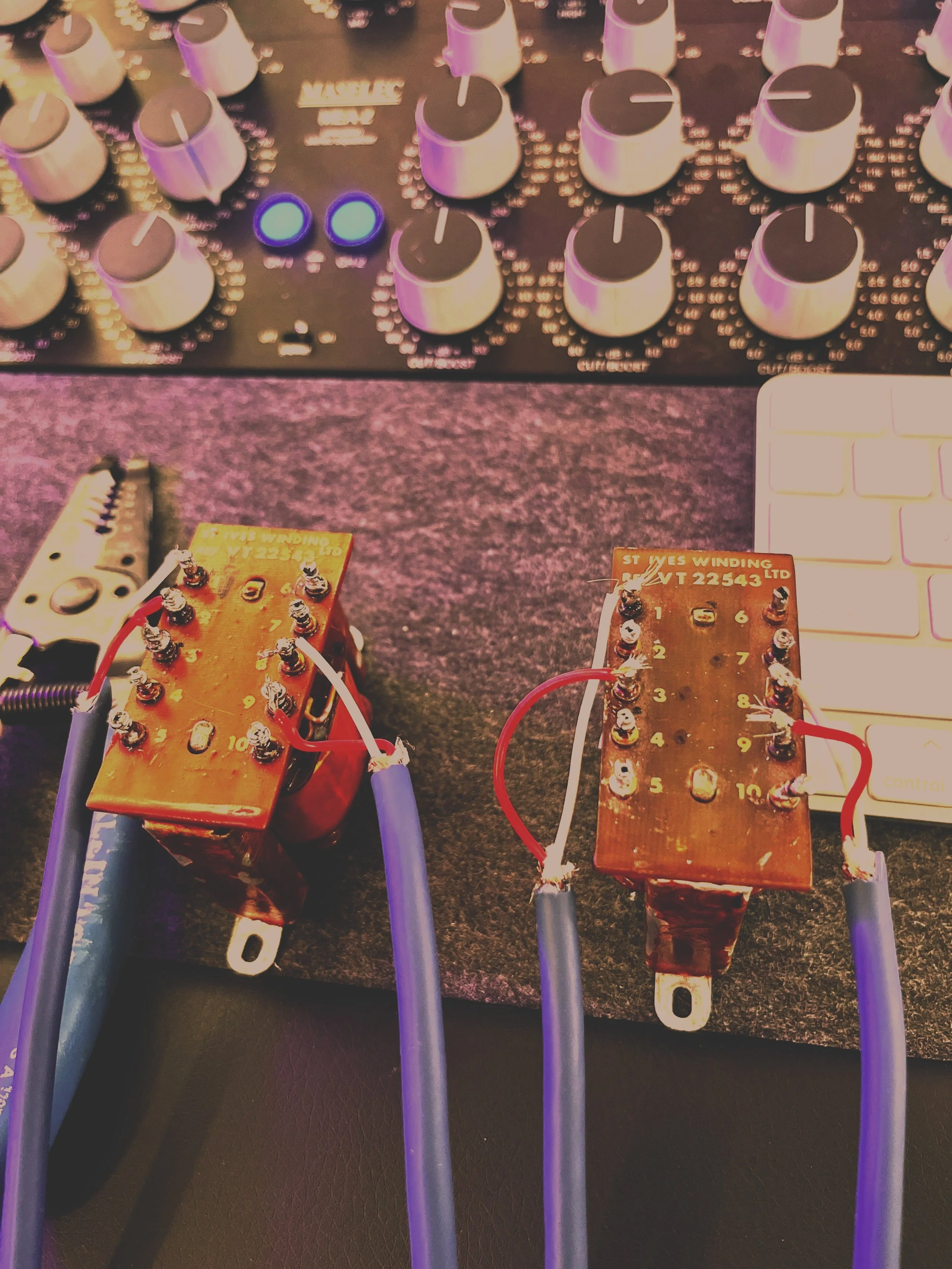
Neve/St. Ives VT-22543
Brooks also included two different tap sets on the UTC, providing subtle tonal variations within that position. The St. Ives transformer comes from a decommissioned 1970s BBC Neve 8026 console, specifically the output section of Neve 3401 line amp modules.
Photos
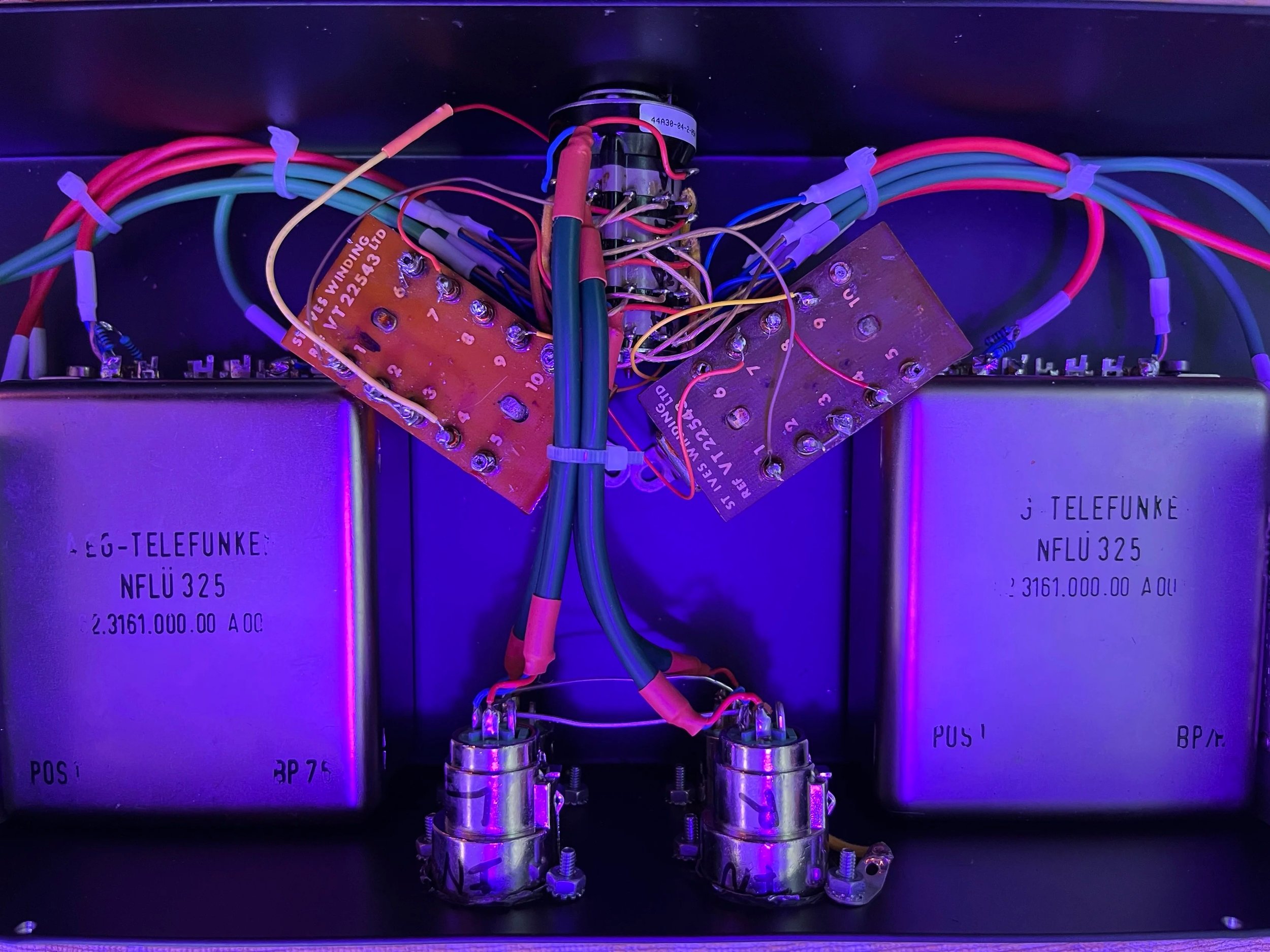
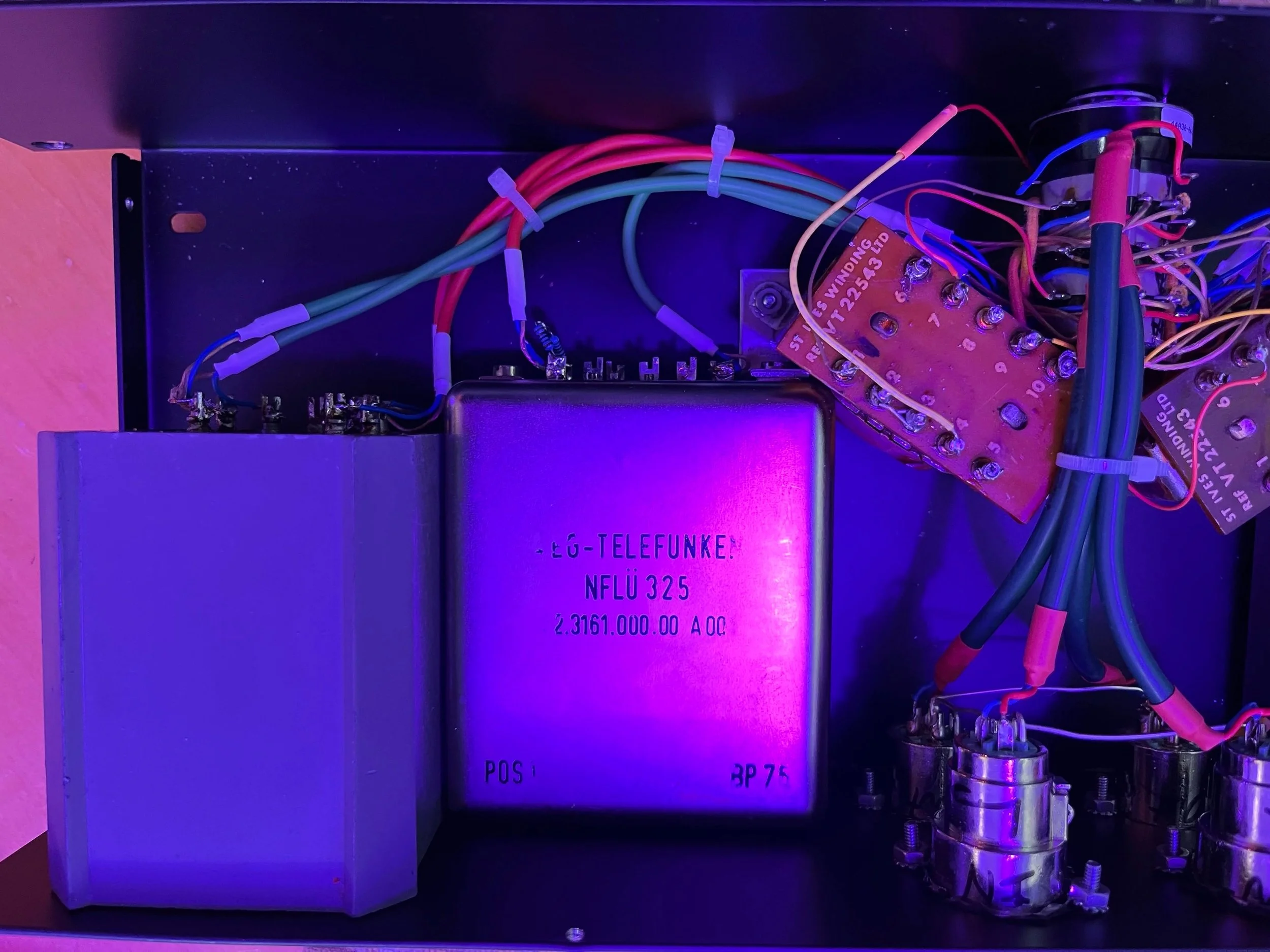
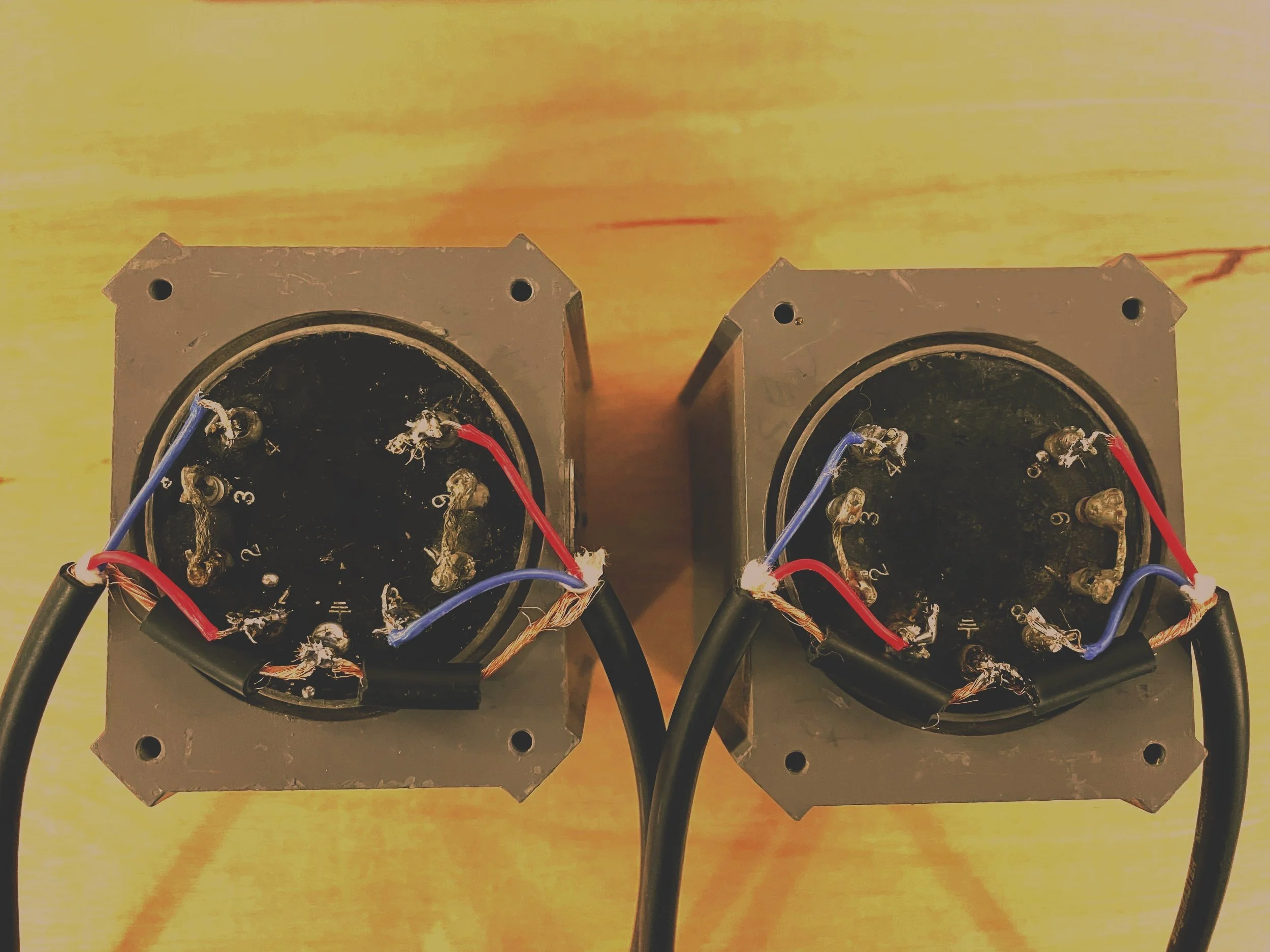
Telefunken NFLÜ 325
The Telefunken NFLÜ 325, from the late 1970s, is a broadcast-era line transformer built for German broadcast infrastructure, linking studios over high-level lines. It emphasizes intelligibility, stability, and low distortion at moderate levels rather than overt coloration. Its sonic signature includes tight low-end density below 60Hz, clean midrange, and extended, smooth highs. Key design features include nickel laminations, high primary inductance for its size, and conservative flux density targets.
UTC LS-140
The UTC LS-140 comes from the American broadcast and industrial lineage, a 1940s design that stayed in production for decades. Designed for robust, predictable behavior, it offers thick low end, forward mids, slight rounding, and dense highs. Its construction features nickel-iron laminations with higher saturation potential, lower primary inductance compared to many European designs, and multi-section interleaved windings for tight coupling.
Neve / St. Ives VT-22543
The Neve/St. Ives VT-22543, from the mid-1970s, is an original St. Ives Windings design that ran parallel to the Marinair-spec transformers of the era. Known for the classic British iron sound, it delivers big low end, rich midrange, and slightly veiled highs. Its construction includes steel laminations with relatively high flux density and moderate inductance, with less aggressive bandwidth optimization than the Marinair-spec designs.
What It Is and Is Not
The Big Crunch Transformer Box is a tool for exploring how transformers shape the tonal character of a mix. Each one reacts differently, contributing heft, harmonic color, and glue in ways that feel like the mix is doing it rather than something being applied from outside. It is not something I reach for on every session. It is something I reach for when the program material calls for what transformers specifically do, and when passing a mix through a piece of vintage iron is the most direct path to the result.
Continue reading Part 2 of 2: Iron Logic: Transformer Theory Applied to Mastering. A practitioner-level deep dive into the physics behind what you just read.