The Big Crunch Transformer Box | The Nerd Edition
Why Transformers in Mastering?
In mastering, transformers are not just passive components. They are responsive tonal tools. They shape sound through frequency-dependent saturation, subtle phase interactions, and harmonics that shift depending on the program material. A delicate acoustic mix, a dense rock track, and a modern electronic production all excite the same transformer differently, which makes it uniquely interactive at the final stage.
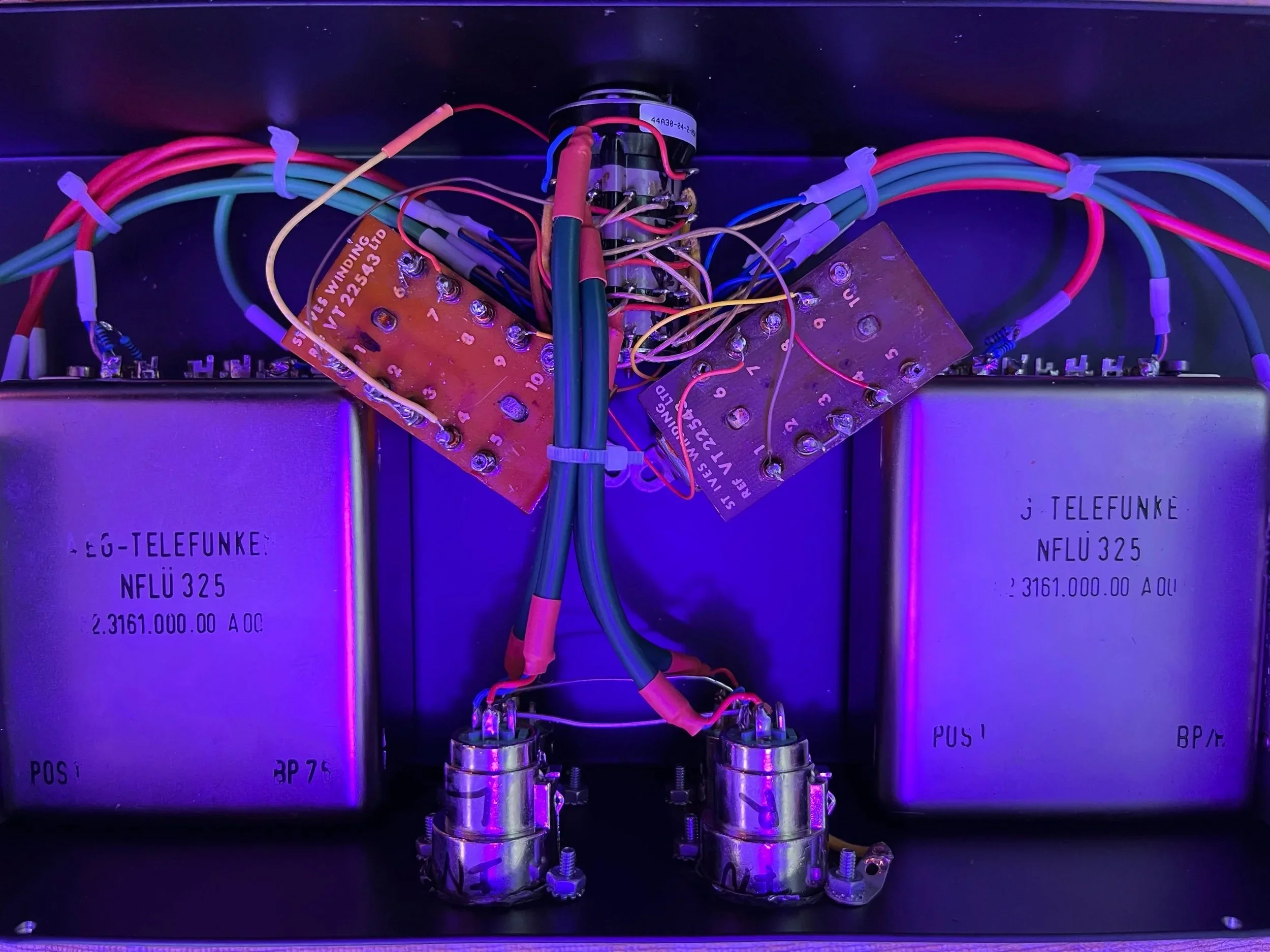
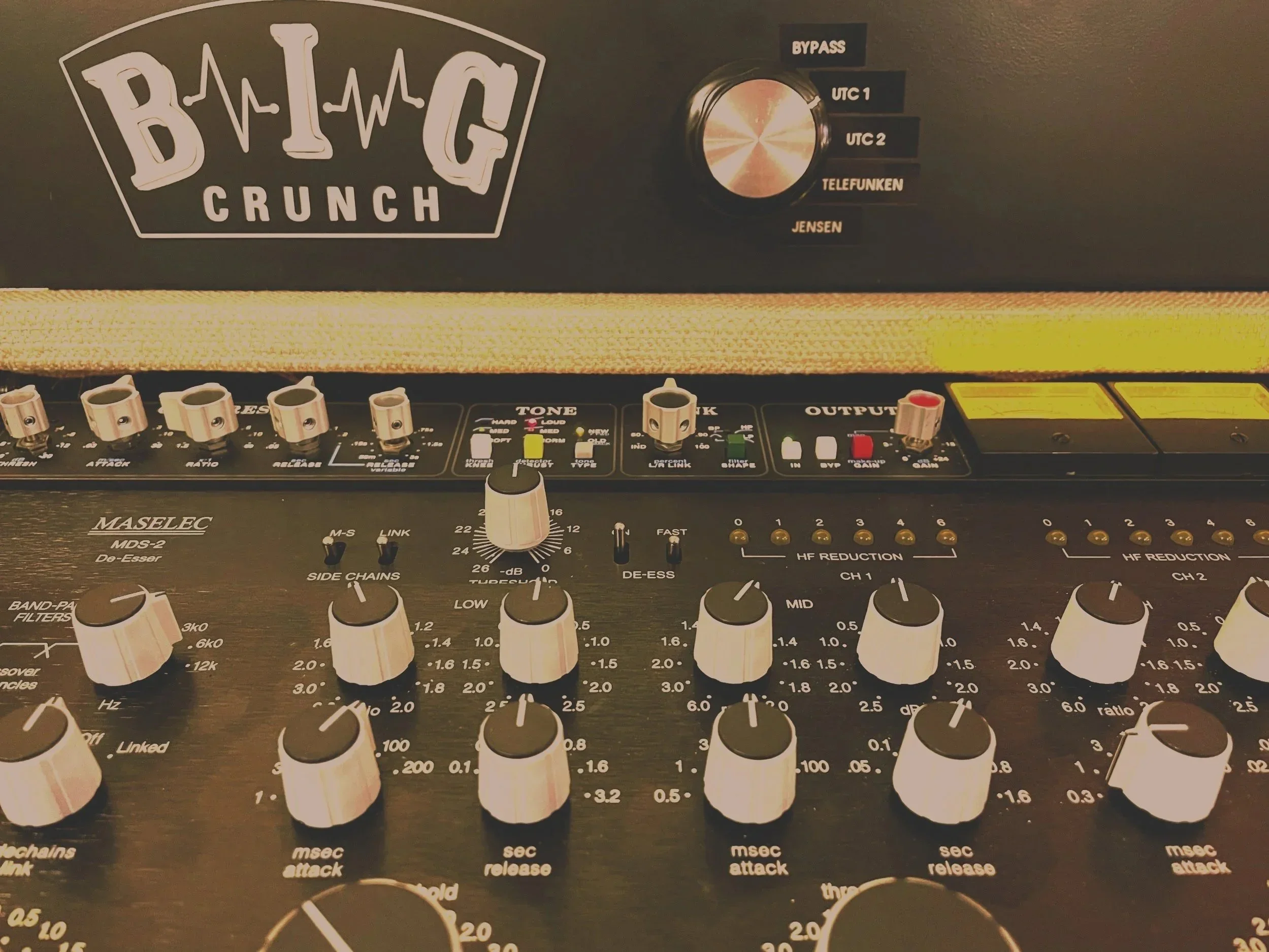
Brooks Harlan and Shawna Potter at Big Crunch built me a custom passive transformer box to explore these interactions directly. Finished mixes pass through vintage line transformers wired at 600Ω in and out, fully level-matched, with an Elma rotary switch for selecting the transformer while every other variable stays constant. The result is subtle but perceptible: shifts in density, tonal weight, and cohesion that feel intrinsic to the mix rather than imposed on it.
What follows covers the box and the physics behind it. It is not a primer. If impedance ratios and hysteresis are new concepts, the Tape Op transformer article is a good place to start. This assumes you are already comfortable with the basics and want a framework for applying transformer behavior to mastering decisions.
The Box
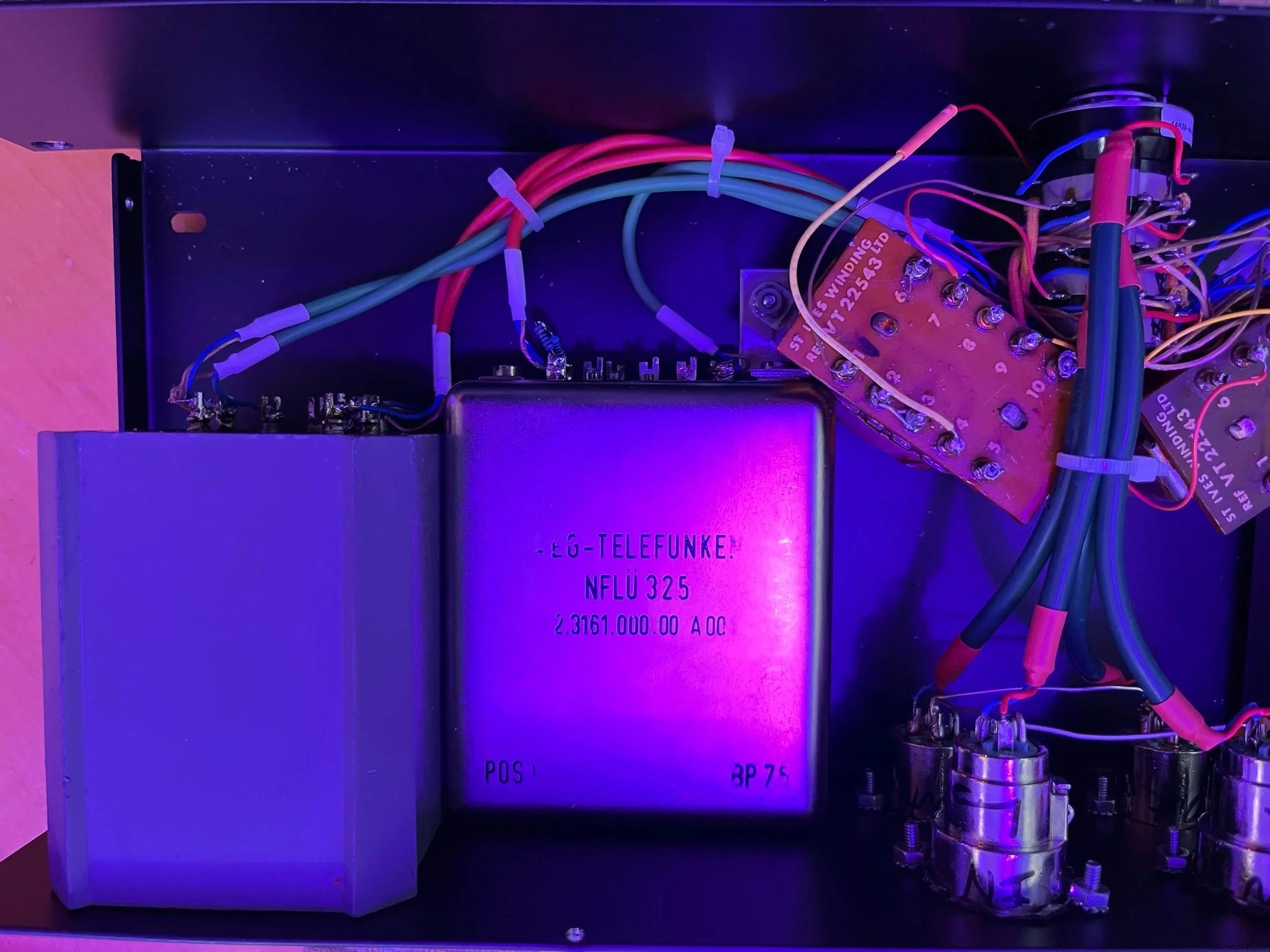
The box houses three transformer pairs:
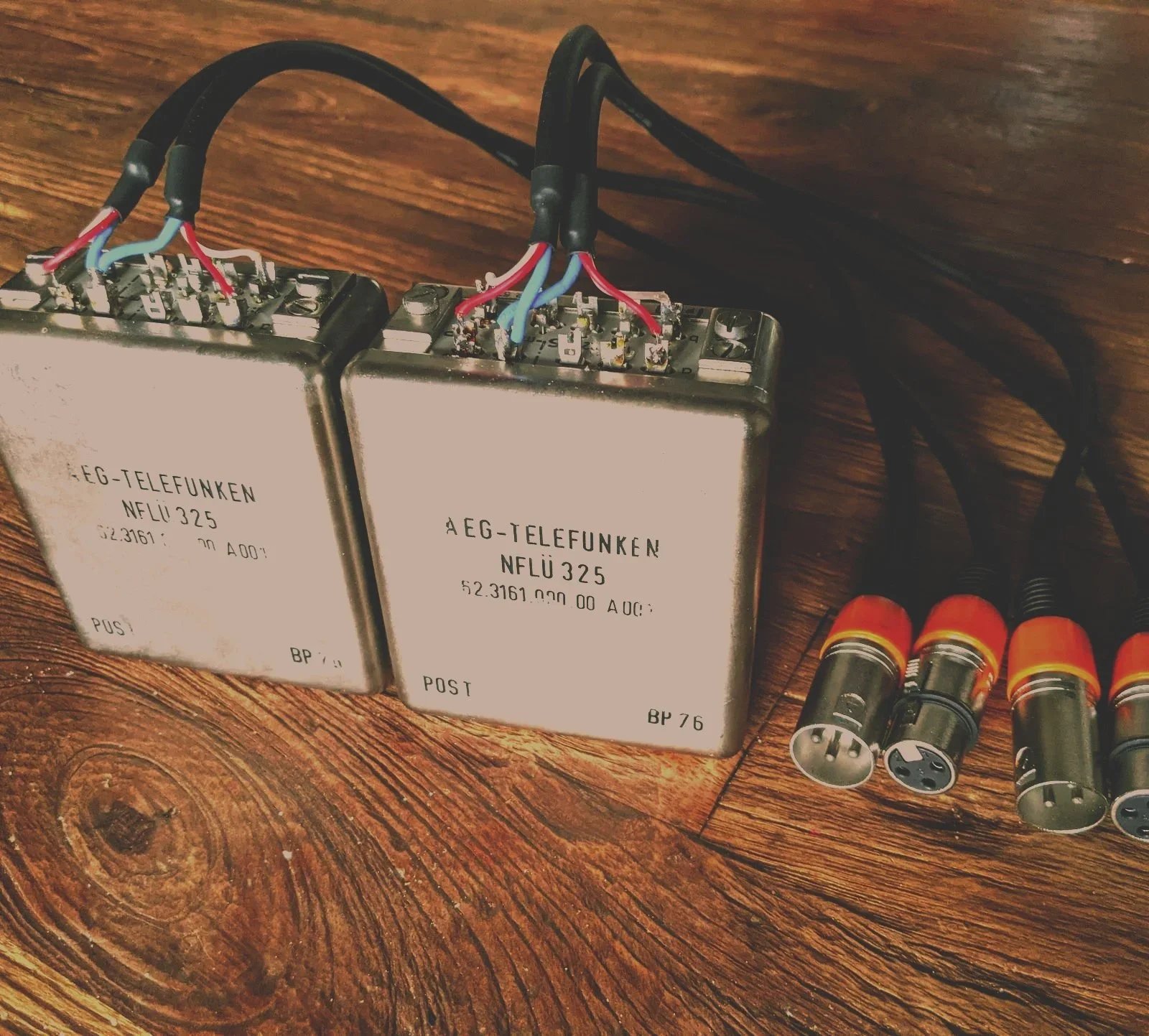
Telefunken NFLÜ 325
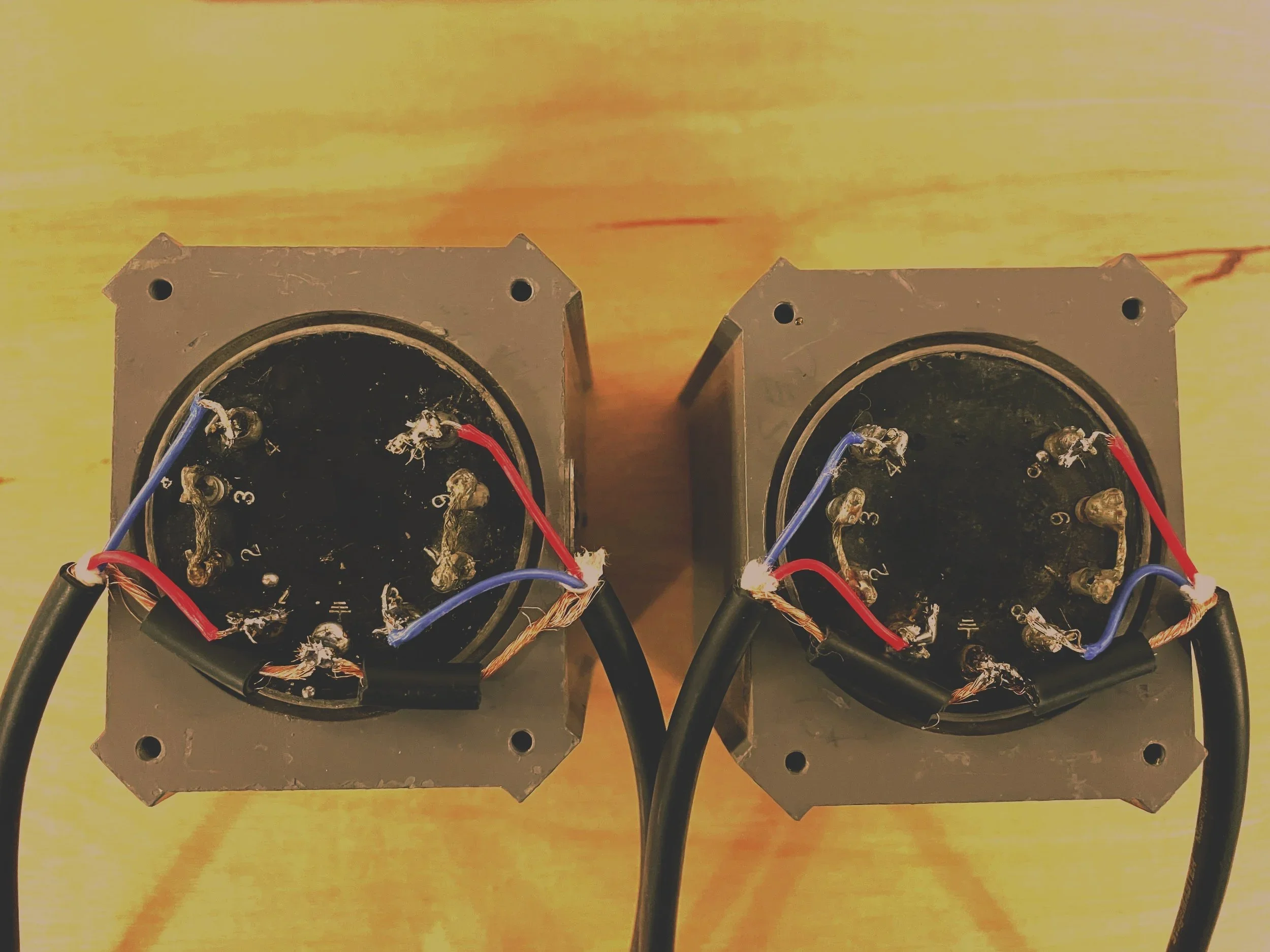
UTC LS-140
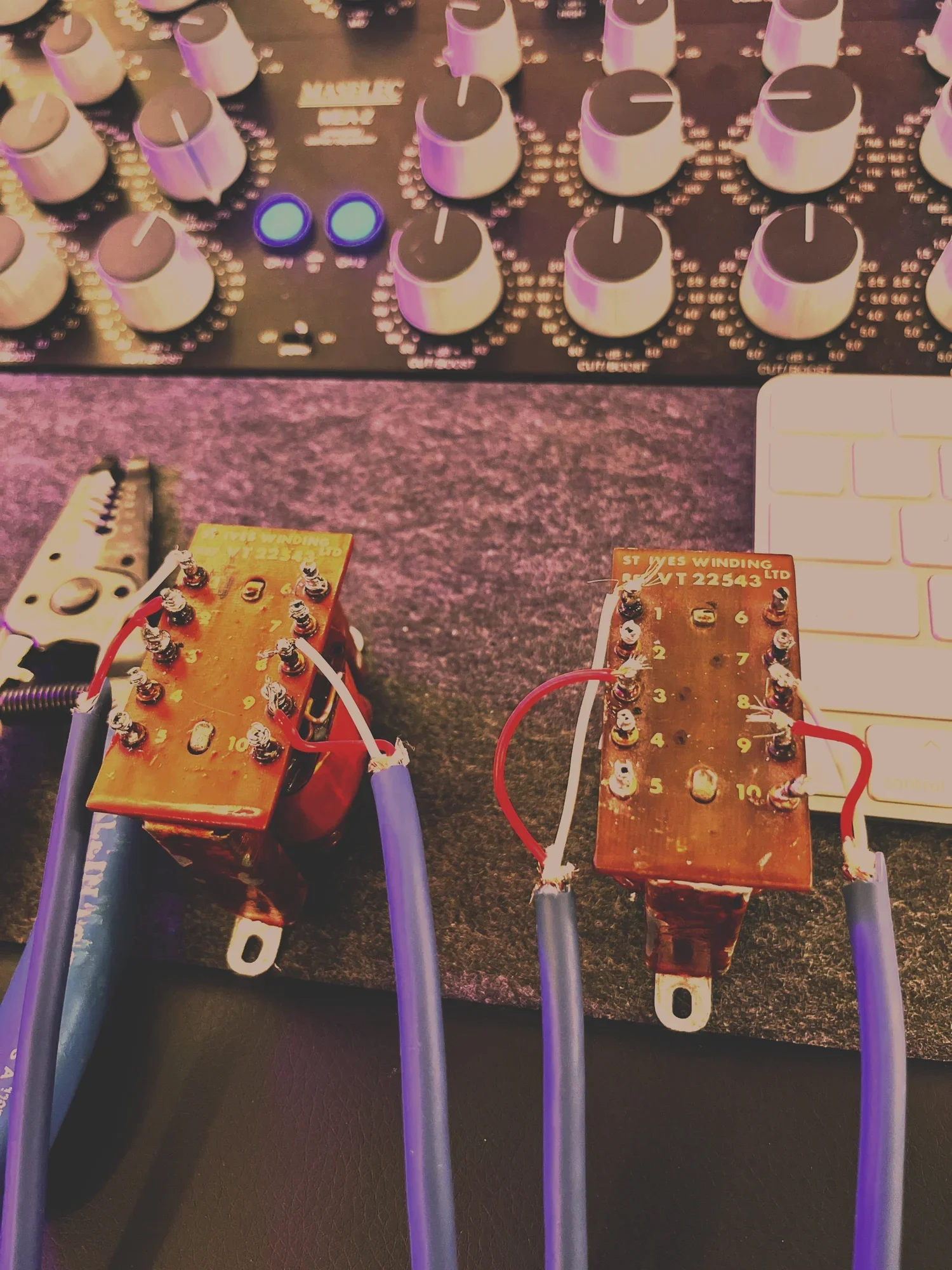
Neve/St. Ives VT-22543
Brooks also included two different tap sets on the UTC, which gives four selectable positions across the three transformers. The St. Ives transformer comes from a decommissioned 1970s BBC Neve 8026 console, specifically the output section of Neve 3401 line amp modules.
Why Transformers Behave Differently in Mastering Than Anywhere Else
In most signal chain positions, a transformer is doing a specific job at a relatively fixed operating level: balancing a line, stepping impedance for a mic preamp, coupling a power amp. The transformer is sized and biased for that job, and the program material is a secondary concern.
At the mastering stage, none of that is true. You are passing a finished stereo mix through a transformer that was not designed with your specific program material in mind, at levels and spectral distributions that vary enormously from session to session.
A sparse acoustic record and a dense, brick-walled metal master can hit the same transformer at the same level and produce meaningfully different results.
That variance is the whole point. It is also why transformer saturation in mastering is harder to reason about than in a tracking context, and why a controlled listening setup matters.
The core mechanism: flux density and the B-H curve
A transformer transfers energy magnetically. The core material magnetizes and demagnetizes in response to the incoming signal, and the relationship between the applied magnetic field (H) and the resulting flux density in the core (B) is nonlinear. That nonlinearity is the B-H curve, and everything interesting about transformer saturation lives on it.
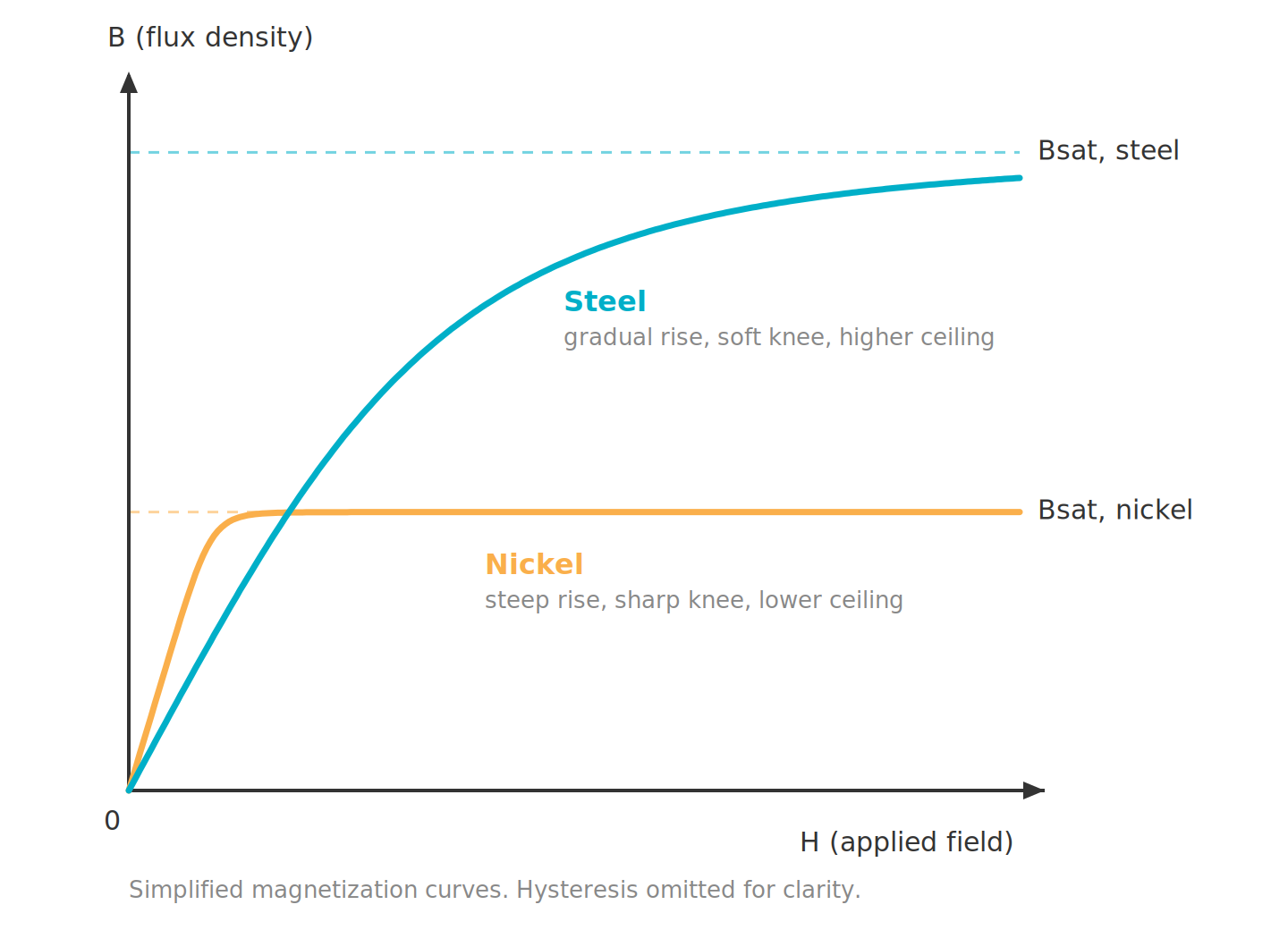
The B-H curve maps applied magnetic field (H) to flux density (B) in the core. Nickel laminations reach saturation earlier, more abruptly, and at a lower flux density ceiling. Steel laminations have a wider linear region and support a higher flux density before compression sets in. Curves are simplified; hysteresis omitted for clarity.
At low flux densities, the curve is close to linear and the transformer behaves cleanly. As flux density increases, the curve compresses and then flattens, which means the output no longer tracks the input proportionally. That compression introduces harmonic distortion.
Core saturation itself is predominantly odd-order, with the third harmonic dominant. Even-order content arises from asymmetries in winding construction, circuit context, and the characteristics of the signal rather than from the core mechanism directly. In any real transformer those asymmetries are always present, so even-order content is a genuine and often dominant part of the perceived character. Where the sections below describe even-order warmth, that is the asymmetry-driven component rather than the core.
Crucially, flux density is frequency-dependent. At lower frequencies the core has to swing through more of the B-H curve to support the same voltage, so low-frequency-heavy program material pushes a transformer harder than high-frequency-heavy material at the same RMS level. A mix with a lot of sub and low-mid content will saturate a given transformer differently than one that is bright and sparse down low.
This is why transformer behavior in mastering is genuinely program-dependent and not just a fixed coloration. The same iron will respond differently to a hip-hop record with a lot of 60Hz content than to a folk record with most of its energy above 200Hz.
Core material: nickel versus steel
The core material determines where on the B-H curve a given transformer operates and how it distorts when driven. Nickel alloys such as mu-metal and permalloy have higher permeability at low flux densities, which makes them cleaner at low levels but also means they reach saturation earlier and more abruptly, at a lower absolute flux density than steel.
Nickel content matters here. High-nickel alloys like mu-metal, around 80% nickel, show this behavior most strongly. Lower-nickel iron alloys like HiPerm-Alloy, around 49% nickel, sit between mu-metal and steel, with a higher saturation ceiling and a gentler onset than mu-metal while still adding character sooner than steel. Steel laminations have lower permeability but a wider linear region and a higher saturation ceiling, so they absorb more level before the curve compresses, and their saturation onset is more gradual.
For mastering, the practical implication is that high-nickel transformers tend to add a more defined character even at moderate levels, which can read as density and presence. Nickel-iron units are less overt, closer to steel in how gradually they come on. Steel-core transformers are often described as warmer or more neutral at moderate levels, with saturation that creeps in gradually rather than announcing itself. Neither is categorically better. It depends on what the mix needs and how you want the coloration to behave under dynamics.
One qualifier that matters more than the alloy chart suggests: core geometry and mass can move a transformer's effective behavior well away from what its material alone would predict. A large toroidal core with a continuous magnetic path and no air gap spends its working life low on the curve and stays composed at levels where a smaller or gapped version of the same material would already be compressing. The Telefunken below is exactly that case.
Core materials in audio transformers at a glance
| Material | Composition | Saturation ceiling | Onset | Character | Typically found in |
|---|---|---|---|---|---|
| High-nickel (mu-metal, permalloy) | ~80% nickel | Lowest | Early and sharp | Very clean at low levels, then a defined character arrives quickly; density and presence | Mic input transformers, vintage European broadcast iron |
| Nickel-iron (Hipernik, Radiometal, 4750 alloy) | ~50% nickel | Moderate | Moderate and gradual | The middle path; fullness in the low end without grit, colors sooner than steel | American broadcast line transformers, including the UTC Linear Standard series |
| Amorphous metal (Metglas class) | Iron-boron-silicon, no fixed crystal structure | Moderate | Moderate | Very low loss; clean and detailed, the least vintage-sounding of the group | Modern boutique audio transformers |
| Silicon steel (grain-oriented iron-silicon) | No nickel; iron with a few percent silicon | High | Late and gradual | Near neutral at moderate levels; low-mid warmth that creeps in when pushed | Console output transformers, the classic British iron sound |
| Cobalt-iron (permendur) | ~49% cobalt, ~49% iron | Highest | Very late | The biggest ceiling made; stays linear where everything else has given up | Aerospace and high-power designs, rare in audio |
Impedance Loading and Why 600 Ohms Matters
The box is wired at 600Ω in and out. That is worth explaining, because the termination impedance has a direct effect on both frequency response and saturation behavior.
Transformers are designed to operate into a specific load. When the secondary is loaded correctly, the primary reflects that impedance back through the turns ratio and the transformer operates within its intended parameters. When the load is wrong, two things happen: frequency response changes at the extremes, and the effective operating point on the B-H curve shifts.
600Ω is the classic professional audio standard, and most vintage line transformers were designed with it in mind. Operating at 600Ω keeps the transformer in the region its designers intended, which means the saturation behavior you are hearing is what the core was built to do rather than an artifact of incorrect loading. It also makes comparisons between transformers more meaningful, because the external variables are held constant.
Load a 600Ω transformer into a modern high-impedance input and you will typically see a resonant rise in the high-frequency response and altered saturation behavior, because the secondary is no longer damped by the intended load. That is the same mechanism behind the Telefunken's top-end lift, described below.
Frequency-Dependent Saturation as a Tool
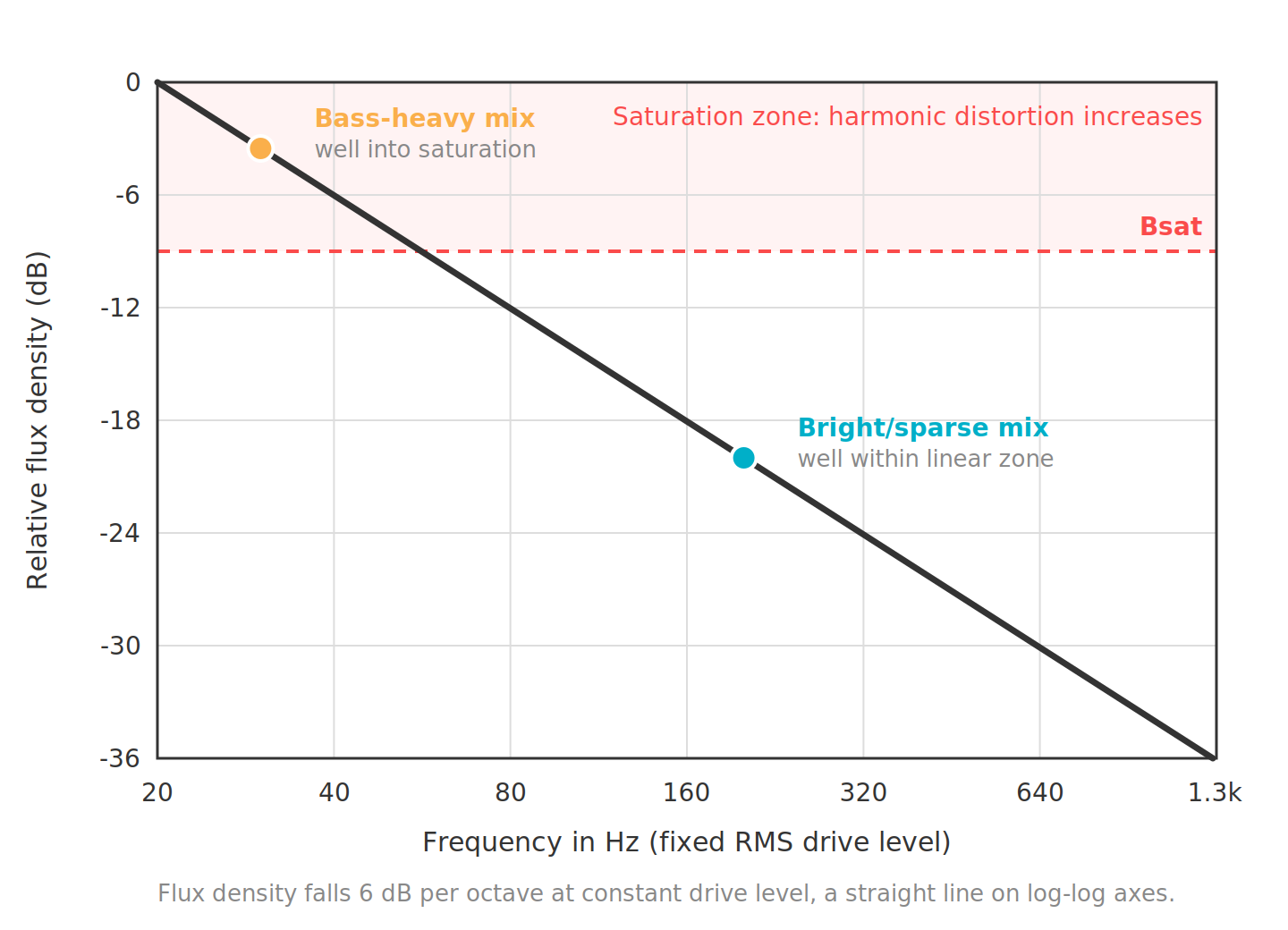
At a fixed RMS input level, lower frequencies drive higher flux density in the core, falling 6 dB per octave as frequency rises. Two mixes at identical levels can operate in completely different regions of the transformer's response depending on their spectral content.
Because transformer saturation increases with flux density, and flux density increases at low frequencies, a transformer acts as a frequency-weighted saturator. The bottom of the mix saturates more readily than the top, which has a few consequences worth understanding.
Low-frequency density
Low-level saturation in the bass and low-mid range adds even-order harmonics that are musically consonant with the fundamental. This can make bass instruments sound more present, not because the fundamental is louder, but because the added harmonic content gives the ear more information to place the instrument spatially and spectrally. A similar mechanism is part of what makes tape sound full at moderate levels.
For material that needs low-end weight without simply adding level, this is genuinely useful.
The transformer is not boosting the low frequency content. It is enriching it harmonically in a way that the ear reads as density.
Transient behavior and phase
Transformers have finite bandwidth, and their phase response is not flat. At low frequencies there is a high-pass rolloff with associated phase shift. At high frequencies, leakage inductance and winding capacitance create a rolloff and resonance. Within the passband, the phase response is not the gentle slope of a simple filter but something more complex that depends on core geometry and winding construction.
The practical effect on transients is subtle but real. Fast transient energy, which carries a lot of high-frequency content, passes through differently than sustained tones. Attacks can soften slightly, which some engineers describe as a transformer giving a record a sense of having been recorded rather than assembled. Whether that is desirable depends entirely on the material.
Stereo image and inter-channel coherence
One of the less-discussed effects of a well-matched transformer pair on a stereo bus is what happens to the inter-channel relationship. Because both channels pass through matched iron with near-identical nonlinearities, correlated content is processed symmetrically and the saturation artifacts are themselves correlated. Uncorrelated content is processed by the same mechanism, but the resulting harmonics are not correlated with each other.
The perceptual result is often described as the stereo image feeling more stable or cohesive. The center locks in and the sides feel more clearly defined against it. This is not a level or EQ effect. It is a consequence of correlated saturation artifacts reinforcing the center's harmonic content.
The Three Transformers
Rather than treating them as interchangeable options, it is more useful to think of each as having a different relationship to the program material.
Telefunken NFLÜ 325
A 600Ω line transformer from 1970s German infrastructure, built to carry high-level audio between studios over long runs. NFLÜ stands for Niederfrequenz-Leitungsübertrager, an audio-frequency line transformer. It is a standardized type designation rather than a single product run, which is why surviving examples carry date stamps spread across several years, and why the same part turns up in telecom service as well as broadcast. Mine are stamped 1976.
Construction is toroidal rather than stacked laminations: roughly a kilogram of core per unit, a continuous magnetic path with no air gap, and independent secondaries giving 2:1, 1:1, and 1:2. That buys high inductance and real headroom for the size, with maximum level in the region of +21 dBm. It is also why it stays composed rather than breaking up early. The operating point sits low on the curve at any level a finished mix will present, well short of the knee.
Terminated properly it measures flat within about ±0.3 dB from 20Hz to 20kHz. Leave the secondary lightly loaded and a shelf of roughly +4 dB at 20kHz appears, which flattens again when a 600Ω resistor is strapped across the output winding. That is the resonance and termination mechanism described above rather than core saturation, which is why the load, not the level, is the control that shapes it.
On the bench its harmonic signature is even-order led, with a low-order ladder that falls off gently as it climbs. Distortion rises as the fundamental drops, so low-frequency energy drives it harder than high-frequency energy at the same level. In practice that reads as weight and a little air rather than grit, which makes it a good fit for material that wants polish up top without a heavy tonal fingerprint. It stays clean on dense material rather than piling on, so termination is usually the first thing to adjust.
UTC LS-140
From the American broadcast and industrial lineage, a 1940s design that stayed in production for decades. It is part of UTC's Linear Standard line and built around a HiPerm-Alloy nickel-iron core, not steel. HiPerm-Alloy is roughly 49% nickel, which puts it between high-nickel mu-metal and silicon steel: a higher saturation ceiling and gentler onset than mu-metal, but it still colors sooner and at lower levels than steel. Primary inductance is lower than many European designs of the period. The Linear Standard series is also known for heavy, high-quality iron, which gives these units real headroom, so the LS-140 stays composed on high-level material despite being a nickel-iron design.
The character is warm and less immediately obvious than the Telefunken, which makes it a good option when you want the effect to feel intrinsic rather than applied. It handles low-frequency-heavy material particularly well, with harmonic enrichment in the bass that reads as fullness rather than grit, adding weight without muddiness. For material that is already tonally balanced but needs more weight and cohesion, the UTC is often the most transparent path there. The two tap sets give subtle tonal variation within the position.
Neve / St. Ives VT-22543
A mid-1970s original St. Ives Windings design that ran parallel to the Marinair-spec transformers of the era, with steel laminations, moderate inductance, and less aggressive bandwidth optimization than the Marinair units. It came from a console line-level stage, which means it was designed to pass line-level program all day without contributing much of its own character.
Used as a mastering insert with matched termination, it behaves differently than it would in its original application, because the operating level and load are not what it was designed around. The result is a transformer that adds a sense of three-dimensionality to the image without a strong tonal fingerprint. It is the least colored of the three at conservative levels, which makes it useful when you want the effect on transient behavior and inter-channel coherence without an obvious midrange character.
Push it harder and the steel-core saturation arrives: low-mid warmth, more weight at the bottom, a slightly softer top. That is the behavior people are describing when they talk about classic British iron, and it is available here, but it is a level-dependent destination rather than the starting point.
Methodology: Controlling the Variables
None of the above is meaningful without a controlled listening context. The Elma rotary switch selects between the transformer paths while everything else stays constant: the source material, the monitoring chain, the listening position, and critically, the level.
Level matching is not optional. Transformer saturation introduces harmonic energy, which raises the perceived loudness of the signal. Switch between a saturated path and an unprocessed reference without compensating for level and you will almost always prefer the louder option, then attribute the preference to the tonal quality of the transformer. This is the most common error in evaluating coloration gear, and it is easy to make even when you know about it.
The box is fully level-matched, so the comparison is between the tonal character and saturation behavior of each transformer rather than between an input level and a processed level. That is harder to achieve in a general-purpose outboard setup, and it is one of the reasons a dedicated comparison box is worth building.
The goal is not to find the transformer that always sounds best. The goal is to understand how each one interacts with a specific mix, so that when a session calls for that kind of treatment you reach for the right iron immediately rather than auditioning through uncertainty.
What to Listen For
When evaluating a transformer, I am listening across a few specific dimensions rather than making a global judgment about whether it sounds good.
Low-end behavior. Does the bass feel denser or muddier? Is the kick more present, or is it starting to blur against the bass? How gracefully a transformer handles this depends on its headroom and how gradually it saturates, not on any single core material, and on how much low-frequency content the mix contains and where it sits.
Top-end character. Some transformers add a high-frequency lift or sheen, particularly when lightly loaded, that is welcome on some material and fatiguing on others. If a mix is already bright or forward, this can push it past the point of comfort.
Transient integrity. Is the attack of percussive elements still doing its job? A slight softening of transient edges can add polish, but if you lose the clarity of a snare hit or the initial consonants of a vocal, the saturation has gone too far for this application.
Stereo coherence. Does the image feel more stable? Is there a sense that the record is sitting together in a way it was not before? This is the effect that is hardest to A/B quickly and most obvious on extended listening.
What It Is and Is Not
The Big Crunch Transformer Box is a tool for exploring how transformers shape the tonal character of a record. Each one reacts differently, contributing heft, harmonic color, and cohesion in ways that feel like the music is doing it rather than something being applied from outside. It is not something I reach for on every session. It is something I reach for when the program material calls for what transformers specifically do, and when passing a finished mix through a piece of vintage iron is the most direct path to the result.
That is ultimately why the box exists: not to impose a sound, but to make these distinctions repeatable and legible across sessions, so the decision is always musical rather than circumstantial.